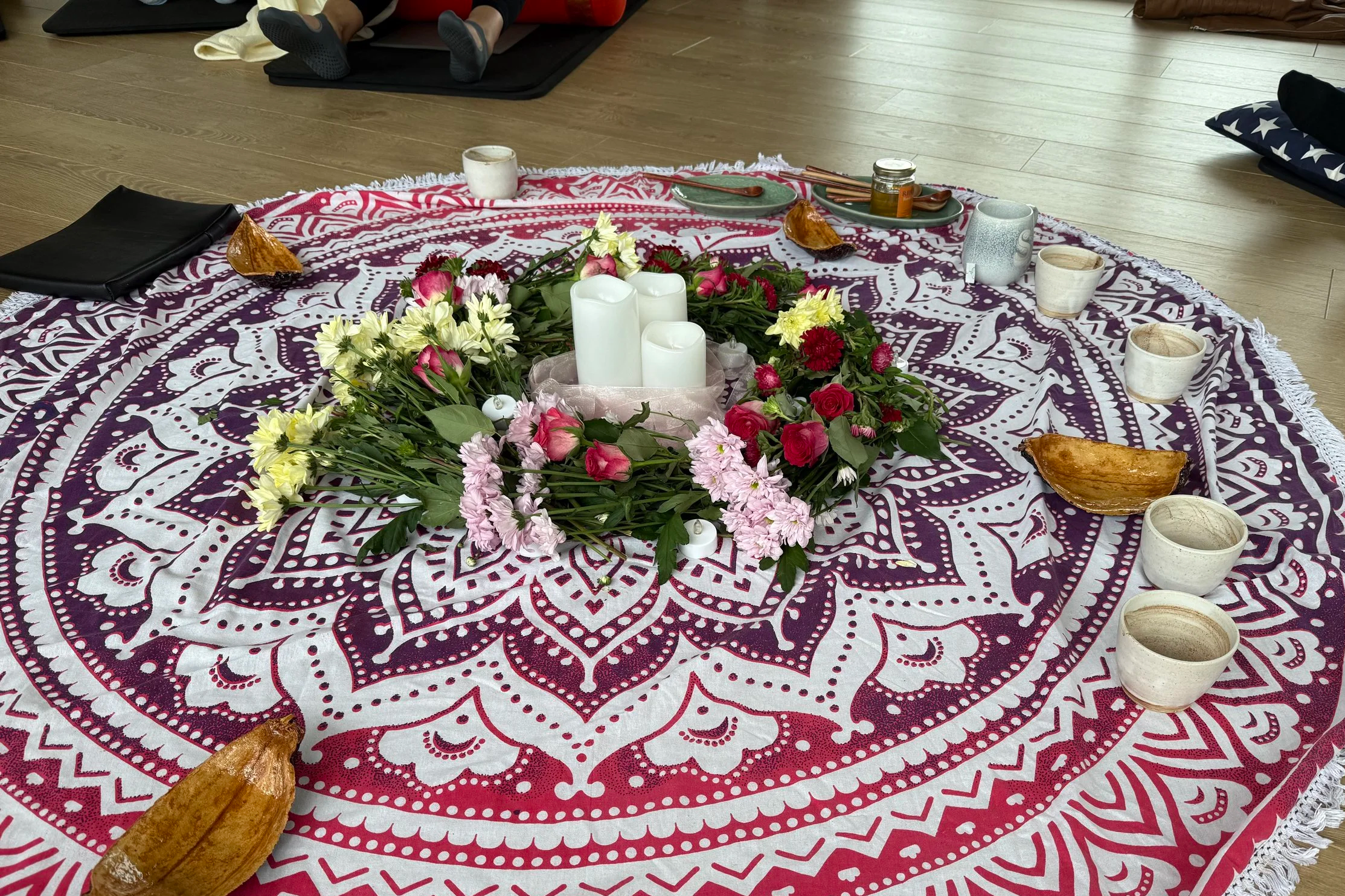

The Power of Ceremonial Cacao on the Nervous System
Cacao is a beautiful plant medicine, widely known for its heart-opening qualities and circulatory benefits. It is a powerful vasodilator, meaning it gently opens the blood vessels to allow increased blood flow throughout the body.
What many people are less aware of is the profound way ceremonial cacao supports the nervous system, especially the autonomic nervous system (ANS).
The nervous system is the body’s sensitive control system, continuously sending signals between the body and the brain. It perceives stimuli, processes information, and helps us determine whether we feel safe in our environment. When safety is not perceived, the nervous system may shift into survival responses, such as fight, flight, freeze, or fawn. Over time, remaining in these states can lead to chronic stress, tension, and disconnection from the purity of life.
When approached with intention, ceremonial cacao can gently support the body in moving out of these trauma-based states and back toward regulation and safety.
HOW:
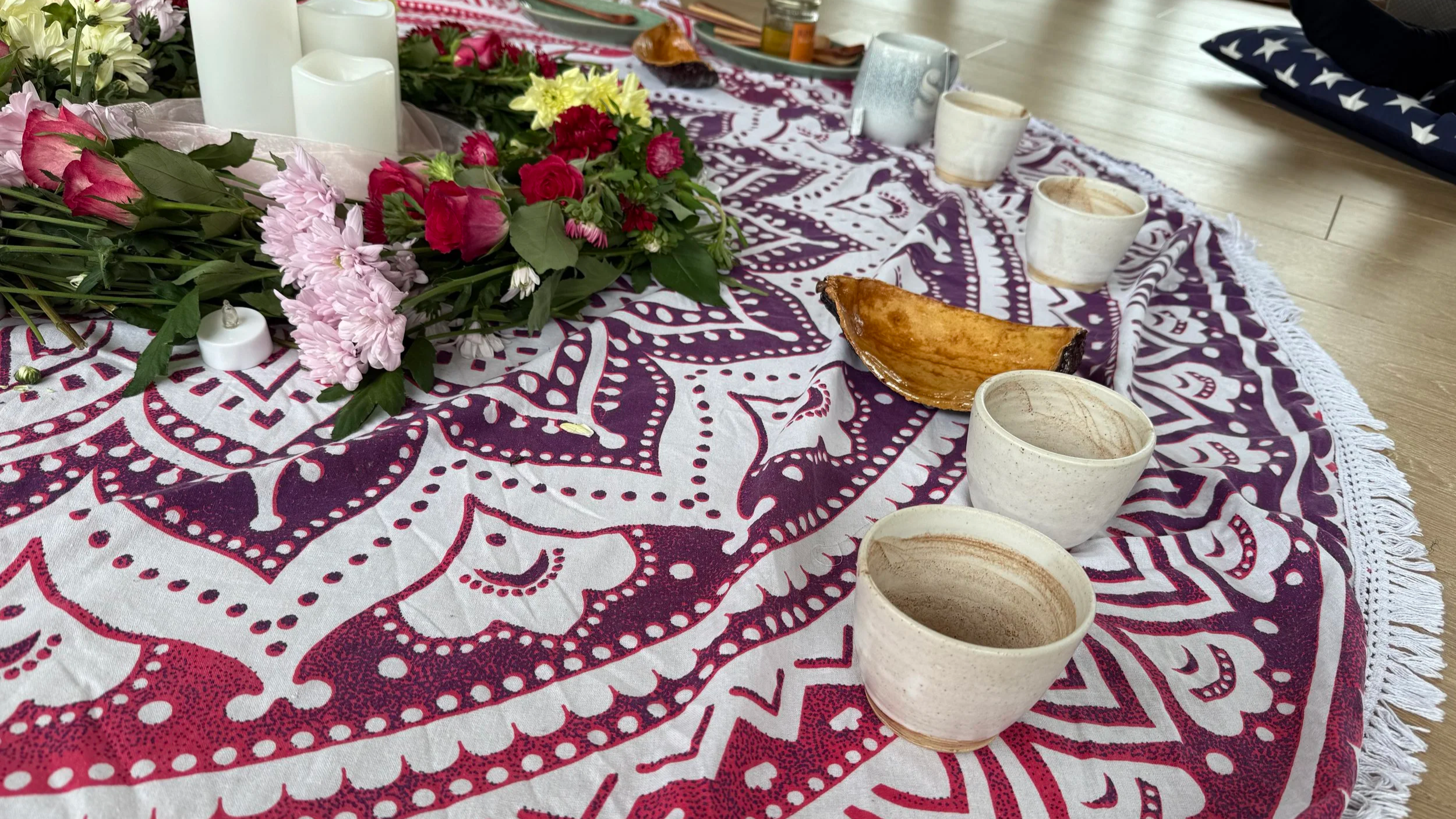
The art of ritual is as ancient as time itself. Across cultures and throughout history, ritual has been used to create meaning, rhythm, and connection.
Rituals help ground us into a sense of safety. They offer predictability, presence, and gentle expansion in the moment, allowing the nervous system to soften and gradually return to a parasympathetic state the state of rest, repair, and restoration.
A cacao circle is not about stimulation, unlike coffee. It is about regulation. It invites slowing down, breathing, intention, and attention. Through this, we are guided into the safety of the present moment, allowing for gentle nervous system expansion while remaining grounded and supported.
This is how cacao is meant to be experienced: a ritual of gratitude, forgiveness, and reconnection back to ourselves and synchronising our nervous system back into the natural rhythm of life.
What Happens in a Parasympathetic State
When the body is in a parasympathetic state, we experience calm, clarity, healthy digestion, emotional balance, and restorative sleep. Regenerative processes are supported, and the body can more easily return to its natural equilibrium, gathering new strength and internal resources.
Ceremonial cacao offers a conscious and nourishing way to regularly support the nervous system, helping it return to balance and gently step out of the stress cycle. Attending a cacao circle or working with cacao at home can be a supportive companion in this process, creating moments of calm, inner balance, and a felt sense of safety, especially when shared in a community of like-minded people.
For sensitive or highly stressed individuals, cacao can offer a much-needed time of respite.
How Ceremonial Cacao Supports the Nervous System
Ceremonial cacao contains a rich array of minerals and compounds that nourish the nervous system, including:
Magnesium, which supports muscle relaxation and a calm nervous system,
Theobromine, a gentle stimulant that enhances circulation and focus
Anandamide, often referred to as the “bliss molecule,” supports feelings of well-being
Theobromine is the primary stimulant in ceremonial cacao, but unlike caffeine, it does not act aggressively on the adrenal glands or cortisol levels. Instead, it works gently and steadily, supporting clearer thinking, a calmer body, increased focus, and reducing overstimulation of the nervous system.
For sensitive, overstressed, or burnt-out individuals, especially those who love or miss coffee, ceremonial cacao can be a beautiful alternative. It offers many of the uplifting effects of coffee without the crash, burnout, or adrenal strain.
Ceremonial cacao also contains tryptophan, a compound involved in mood regulation and emotional balance, further supporting nervous system health.
Creating A Nervous-System-Friendly Cacao Ritual
There are many cacao rituals available, some long and elaborate. The following suggestions have been mindly create, allowing cacao to be gently woven into daily life for those who are longing to slow down or who are especially sensitive, stress and burdened nervous systems, or for anyone longing to slow down.
Morning
Begin your day with a warm, heartfelt mug of silky ceremonial cacao. Pair it with a guided meditation, your own quiet practice, journaling, gratitude, gentle movement, or simply sitting in silence as the morning unfolds.
Afternoon
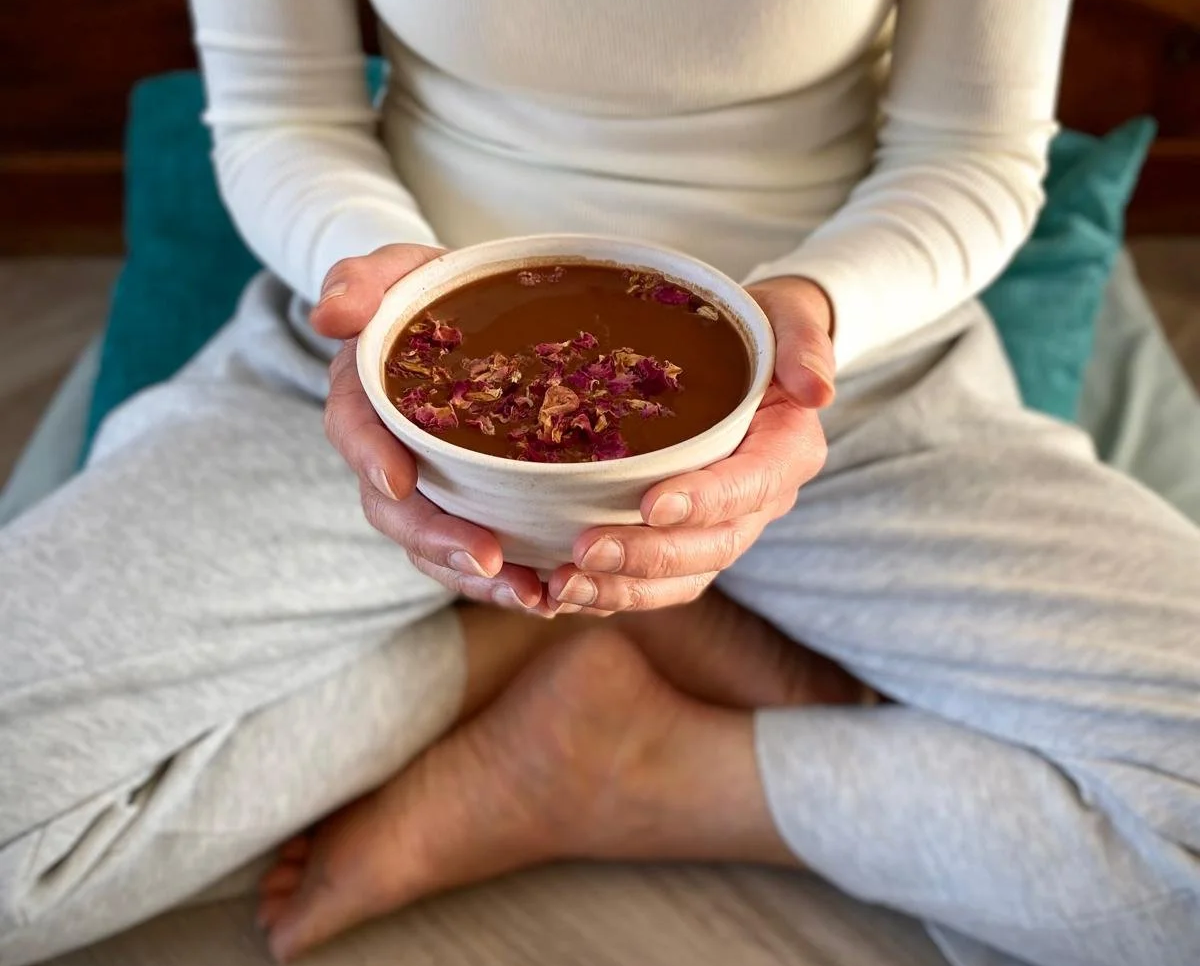
Cacao can be a supportive ally during the afternoon, especially when you feel overwhelmed, stressed, or energetically depleted. This can be a moment to step away, sit quietly, and gather yourself with a mug of cacao.
Evening
Evening cacao can be especially soothing when paired with calming herbs such as lavender, chamomile, peppermint, or mugwort. This ritual can help ease the mind, relax the muscles, and support a deeper night’s rest. You may combine it with yin yoga, a sleep meditation, or gentle music.
On the go (my personal favourite)
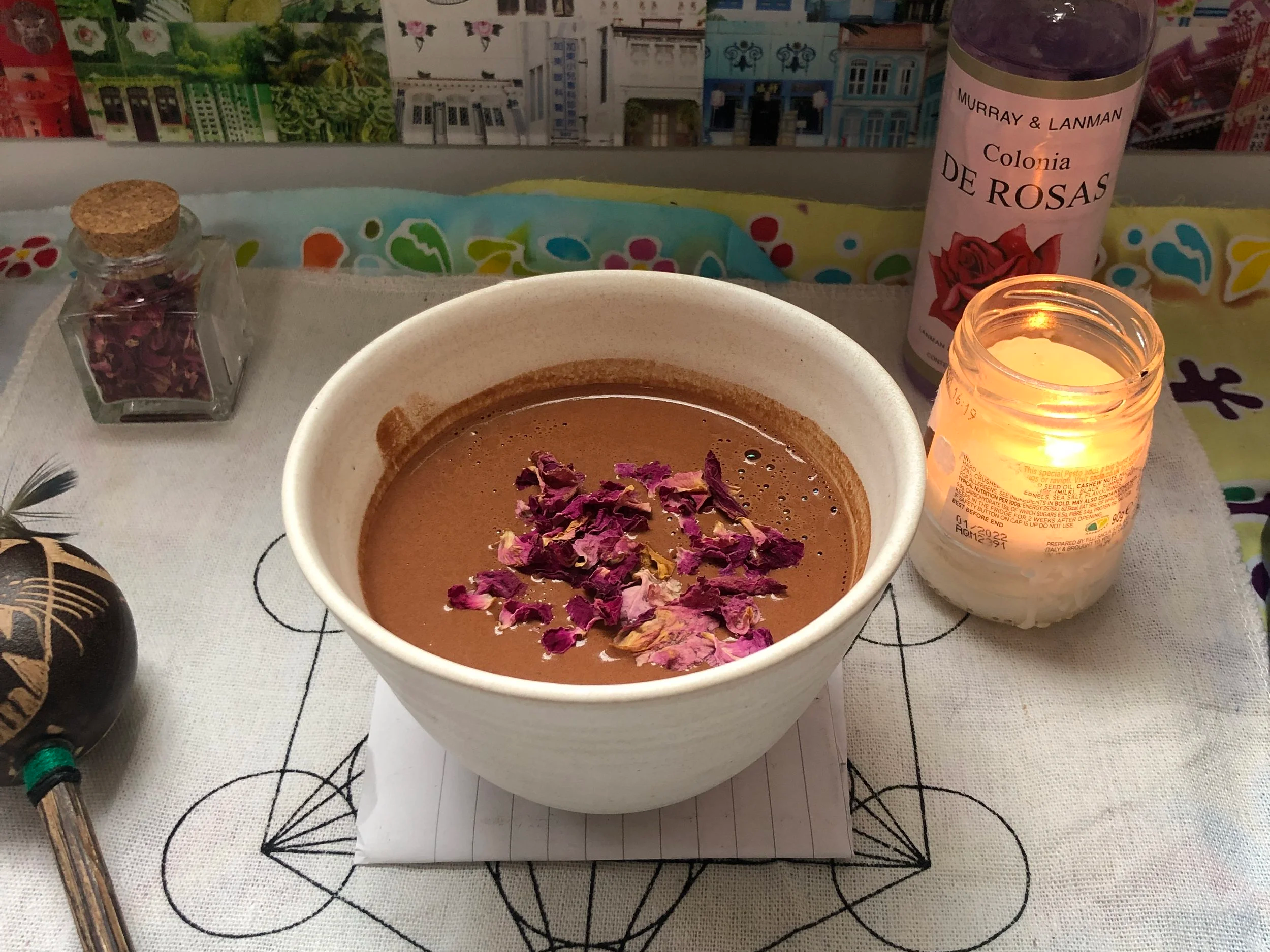
Cacao can also support you on busy or demanding days. Taken hot or cold in a thermos or travel mug, it can be sipped throughout the day as a reminder to return to presence, helping the nervous system stay calm while inviting creativity and focus.
However you choose to work with ceremonial cacao, you will slowly begin to notice and feel its gentle supporting benefits. Feel free to try it for yourself and gift yourself a moment of clarity and inner peace with this wonderful plant medicine.