

The Hidden Connection: How TMJ and Neck Tension Influence Your Nervous System
There is a quiet conversation constantly unfolding within your body — between your jaw, your neck, and your nervous system. When these areas feel supported and balanced, movement is easier, the breath flows more freely, and the body can regulate stress more easily. But when tension builds, the effects often ripple far beyond the jaw itself.
The tension in your neck and jaw doesn't just create discomfort; it has a direct, fast-acting connection to your nervous system.
As a practitioner specialising in TMJ disorders, neck dysfunction, craniosacral therapy, and nervous system regulation, I frequently see how jaw and cervical tension influence the whole body — physically, neurologically, and emotionally. Research increasingly supports what many integrative practitioners observe: the jaw, neck, and nervous system are deeply interconnected.
The Jaw: Structure, Expression, and the Inner World
Your jaw (mandible) is connected to far more than many people realise. It is not only involved in chewing or speaking, but it also plays a meaningful role in nervous system health, breathing, posture, and expression.
The jaw is also part of how we communicate our inner world. Speaking, crying, expressing needs, setting boundaries all pass through this region. When expression feels difficult or unsafe, the body may adapt by holding tension.
The jaw can carry unsaid words and uncried tears. Many people experience:
TMJ dysfunction
Jaw clenching or teeth grinding (bruxism)
Clicking or locking
Throat tension
Hearing disturbances
Facial and neck tightness
Sometimes, we suppress our authentic expression because we fear not being accepted or fully seen. The body often holds what the voice could not release not as weakness, but as protection shaped by the nervous system’s drive for safety.
Alongside this emotional layer, there is also a strong anatomical and neurological explanation for why jaw tension affects the whole body.
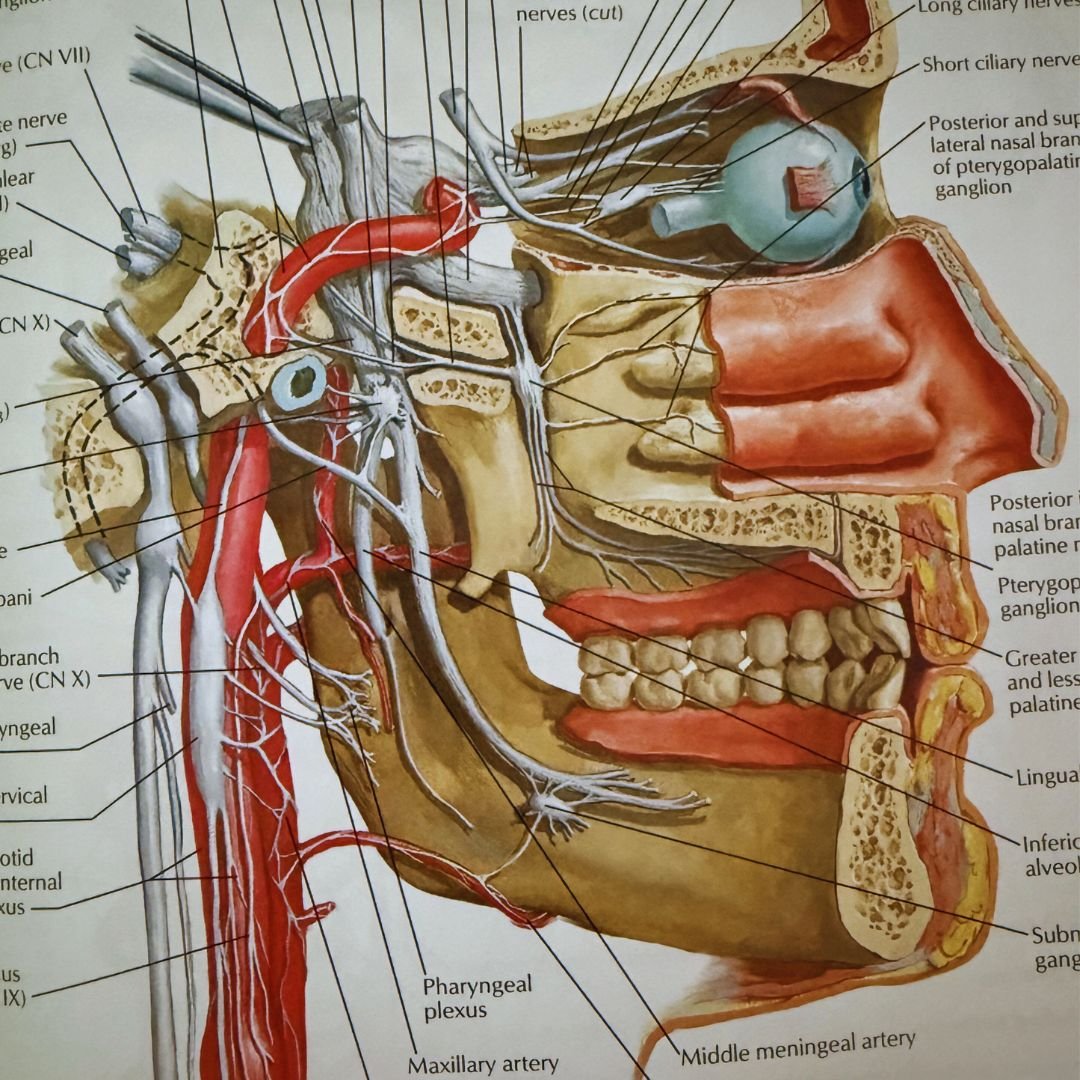
Understanding TMJ and Its Role in Nervous System Regulation
The temporomandibular joint (TMJ) connects the jawbone to the skull just in front of the ears. This specialised joint works in coordination with muscles, ligaments, fascia, and a cushioning disc to allow smooth movement.
Temporomandibular disorders (TMD) can arise from muscular tension, joint imbalance, inflammation, trauma, stress, or postural strain. The TMJ is considered highly neurogenic, meaning it is closely linked to the nervous system and brain.
Structurally, the jaw connects to the upper cervical spine, particularly the atlas (C1), axis (C2), and C3 vertebrae. When an imbalance occurs here, it can influence posture, muscle tone, and neurological signalling. Research shows TMJ disorders and cervical dysfunction often coexist, creating a two-way relationship between jaw tension, neck strain, and nervous system stress.
The Nervous System Link: A Bridge Between Body and Brain
The jaw has a direct neurological pathway to the brain through the trigeminal nerve, one of the largest cranial nerves. This system carries a significant portion of sensory information from the face and jaw to the brain.
When chronic tension, clenching, or inflammation is present, it may contribute to:
Headaches and facial pain
Heightened pain sensitivity
Tingling or altered sensation
Increased stress response
Anxiety and nervous system dysregulation
Because the jaw sits close to the brainstem a key centre for regulating the autonomic nervous system persistent tension can subtly keep the body in a protective state. Over time, this may influence sleep, energy, mood, and the body’s ability to regulate stress.
When the jaw softens, many people notice deeper breathing, emotional release, and a calmer nervous system. This reflects the jaw’s role as a bridge between the inner experience and outward expression.
The Cervical Spine Connection: Support, Protection, and Regulation
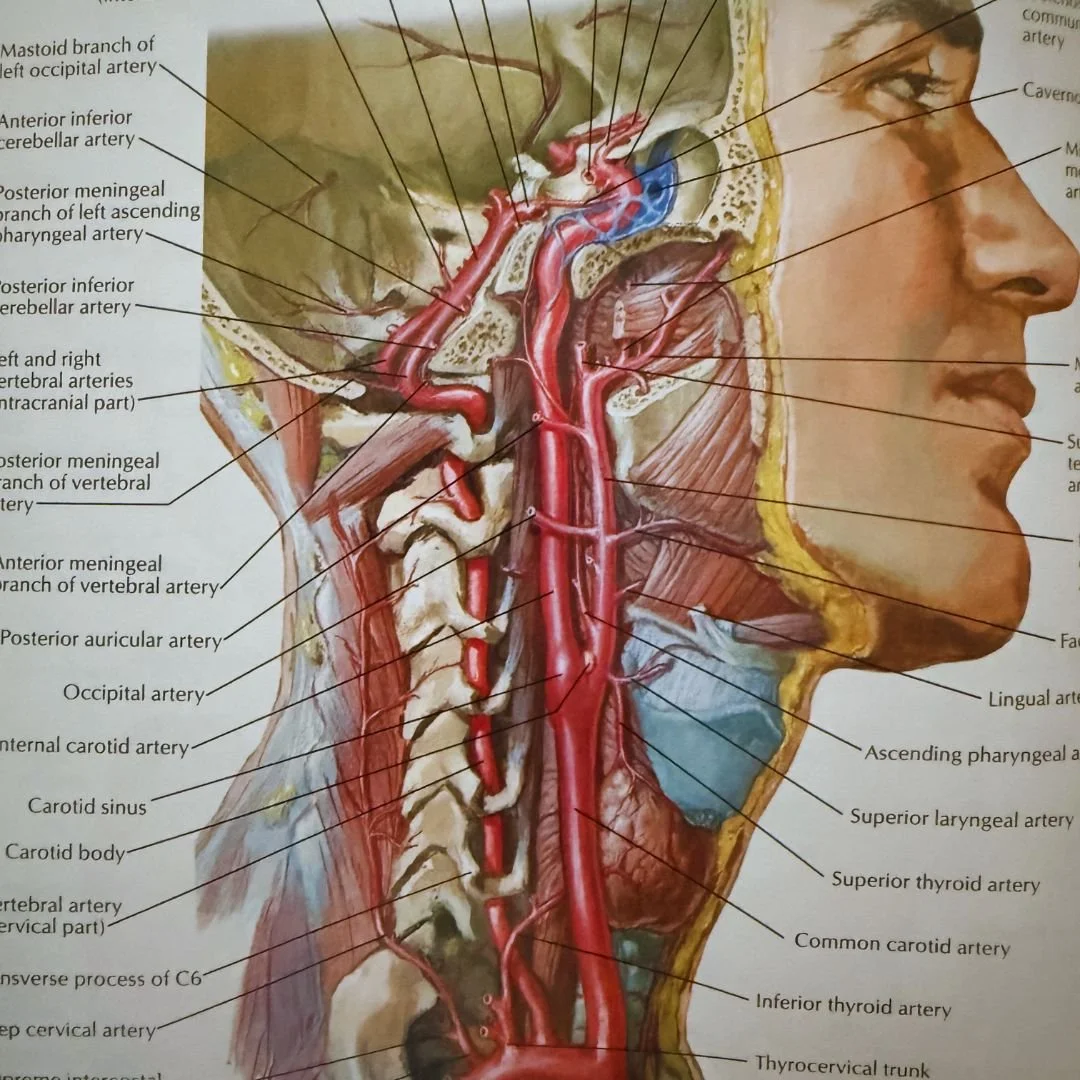
The cervical spine supports the skull and protects the brainstem, a central hub of the nervous system. The upper cervical region (C1–C3) shares neurological pathways with the jaw, meaning dysfunction in one area often affects the other.
Symptoms of combined TMJ and cervical imbalance may include:
Jaw pain or tightness
Clicking, popping, or locking
Teeth grinding or clenching.
Headaches or dizziness
Ear pressure or tinnitus
Neck and shoulder tension
Facial discomfort
Postural imbalance
Research shows TMJ dysfunction can influence cervical biomechanics and muscle coordination, reinforcing the importance of addressing both areas together.
Supporting TMJ, Expression, and Nervous System Balance
The jaw often holds patterns shaped by stress, posture, emotion, and protective responses. These patterns are not faults; they are adaptive strategies created by the nervous system.
Healing does not require forcing release.
It involves creating enough safety for the body to soften naturally.
Craniosacral therapy (CST) is a gentle, hands-on approach that works with the cranial system, jaw, fascia, and cervical spine to release restriction and support nervous system regulation.
Research suggests manual therapy approaches may:
Reduce TMJ pain and muscular tension.
Improve jaw mobility
Support cervical spine function.
Reduce nervous system hyperactivation.
Encourage relaxation and regulation.
Many people also experience emotional softening, reduced internal pressure, and a deeper sense of calm when the jaw and nervous system begin to rebalance.
Returning to Ease
Jaw and neck tension are rarely random. They are often protective, shaped by experience, posture, stress, and nervous system load.
When supported gently and holistically, the body often moves toward greater balance, regulation, and ease.
If you are experiencing TMJ pain, jaw clenching, neck tension, headaches, or nervous system dysregulation, you are warmly invited to explore support.
Learn more about TMJ treatment, craniosacral therapy, and nervous system healing at www.steph-edwards.com
Supporting the jaw is not only about reducing discomfort, but it is also about restoring balance, regulation, and the freedom to express yourself fully.